FY2027 Budget — How did we get here?
Not sure where to start. However, let’s amplify the facts that seem to have been lost over the last week. Before I begin, some frank and honest words. I have never seen a budget like this one. The political “rhetoric” from one member of Town leadership has been clearly inappropriate and lacking details. In addition, the tone and voice level during meetings (and outside of meetings as well) has been nothing short of unprofessional and inappropriate.
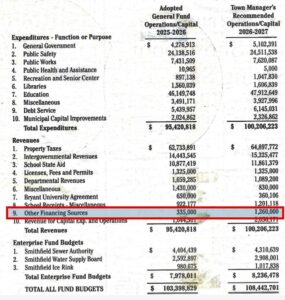
So to be clear, in the last two meetings (Jun07 and especially Jun16), if you were a first-time visitor, you would believe that this was a perfect budget. Specifically missing … that the Town Manager’s submission contained a $1.2m structural deficit see graphic below.
Structural Deficits
For all those non-accounting “geeks”, the term structural deficit is important. Three terms:
- Surplus = Revenue – Expenditures > 0
- Loss = Revenue – Expenditures < 0
- Balanced Budget = Revenue – Expenditures = 0
Simple. When a budget is compiled, the best case scenario is to compute Revenue = Expenditures.
A structural deficit is when the budgeting process creates a “budgeted” loss. Here are the key points:
- A structural deficit occurs when a government’s ongoing expenditures exceed its revenues.
- It reflects a fundamental imbalance in the budget, not just temporary shortfalls.
- This type of deficit often requires long-term policy changes to address.
- It can lead to increased national debt if not managed properly.
- Structural deficits may result from persistent economic issues or demographic changes.
- Addressing a structural deficit can ONLY be resolved by reducing spending or increasing taxes/revenue (or both).
If you had a household budget, it means that you are planning over the course of a year to spend more than you earn (income). Which means what? Withdrawing money out of savings or adding debt to create cash.
Here is an article from the Government Finance Officers Association on this issue (click here).
Here are the perils of a government creating structural deficits:
- Erosion of Fund Balance (as in a family’s savings account).
- Credit Rating Downgrades
- Liquidity Stress (cash flow issues, tax anticipation notes, slipping payments to vendors, etc.)
- Service Degradation (defer maintenance, staff reductions, delay in capital projects).
Key Takeaway Points
A structural deficit with a 50% fund balance decline will trigger:
- Moody’s Red Flags: Weak financial management, Insufficient revenue raising, Narrowing liquidity. Likely movement from a Aa/Aa2 –> A or Baa rating if not corrected.
- S&P Red Flags: Persistent imbalance, erosion of reserves, weak budgetary flexibility
Since the initial BFRB meeting on the budget in late-March, we have not heard any comment on the submission of a structural deficit.
My sense, when the Board uncovered the situation and balanced the submitted and recommended budget to Town Council after our May 20th meeting that placed this fact in the background.
More about this later in Part II.
ss
